Beyond the Benchmark: How Parkland's Real Estate Market Is Quietly Redefining Value in Calgary's Southwest
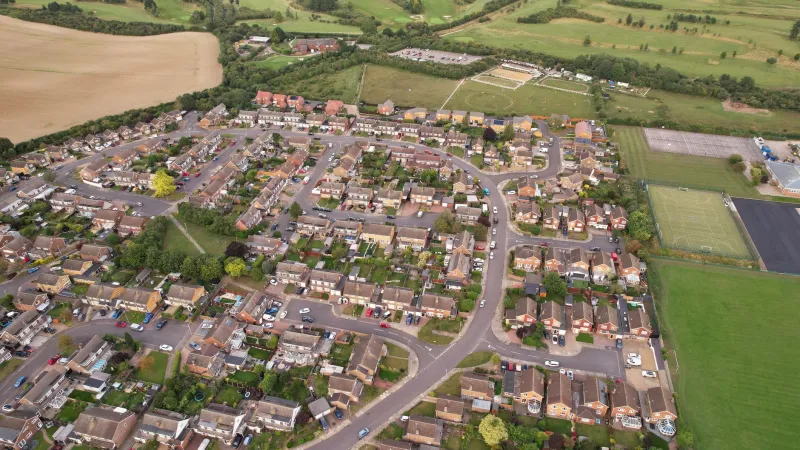
A Quiet Outperformer in a Competitive Market
Calgary's real estate landscape in 2024 has been defined by urgency, scarcity, and a pronounced shift in buyer priorities. Across the city, inventory constraints and sustained in-migration from other provinces have kept upward pressure on prices. Yet within this broader environment, not every neighbourhood has responded equally. Parkland — a mature, master-planned community nestled in Calgary's southwest quadrant — has distinguished itself through a pattern of appreciation that analysts and seasoned investors are beginning to take seriously.
Historically perceived as a family-oriented enclave rather than an investment hotspot, Parkland is now attracting a more diverse cohort of buyers. Move-up purchasers, downsizing retirees, and yield-focused investors are all arriving at the same conclusion: the community's fundamentals are simply too strong to overlook.
What the Numbers Are Actually Saying
Property values in Parkland have demonstrated notable resilience compared to many peer communities in the southwest. While broader Calgary markets experienced volatility during the interest rate adjustment cycle of 2022 and 2023, Parkland homes maintained stronger price floors — a reflection of the neighbourhood's established desirability and limited new supply.
In 2024, benchmark detached home prices in Parkland have continued to trend upward, outpacing several comparable southwest communities including parts of Lakeview and Haysboro on a year-over-year basis. Days on market for well-presented properties remain among the lowest in the southwest, with multiple-offer scenarios still occurring regularly — even in a rate environment that has tempered enthusiasm elsewhere in the city.
For investors, the critical metric is the gap between list price and sale price. In Parkland, that gap has consistently favoured sellers throughout 2024, signalling that demand is not merely speculative but grounded in genuine end-user appetite.
The Demographic Shift Driving Long-Term Demand
Understanding Parkland's investment thesis requires looking beyond transactional data toward the population trends reshaping who wants to live here — and why.
Alberta's net interprovincial migration numbers have remained robust, with Calgary absorbing a disproportionate share of newcomers from British Columbia and Ontario. Many of these arrivals are equity-rich, having sold properties in higher-priced markets, and are actively seeking established communities that offer mature tree canopies, quality schooling, and proximity to amenities without sacrificing urban accessibility.
Parkland checks each of those boxes convincingly. Its location along Fish Creek Provincial Park — one of Canada's largest urban parks — provides an environmental amenity that cannot be replicated or developed away. The neighbourhood's school catchments, including access to reputable Calgary Board of Education and Calgary Catholic School District institutions, remain a primary draw for families with school-age children.
Additionally, an aging baby boomer cohort is increasingly influencing demand in communities like Parkland. Many long-term residents are choosing to downsize within the neighbourhood rather than relocate, reducing turnover and supporting price stability. This internal demand dynamic is a structural advantage that newer communities simply do not possess.
Infrastructure Maturity as a Value Multiplier
One of the most underappreciated investment attributes in residential real estate is infrastructure maturity — the degree to which roads, utilities, parks, and commercial services are fully developed and functioning. In emerging communities, buyers assume infrastructure risk alongside property risk. In Parkland, that equation is fundamentally different.
The neighbourhood's road network, green space allocation, and community facilities are fully established. The Parkland Community Association operates a well-maintained facility that serves as a social anchor, offering programming that reinforces community cohesion and, by extension, neighbourhood desirability.
Proximity to Macleod Trail and access to the broader Stoney Trail ring road system has also enhanced Parkland's commuter profile. As Calgary's southwest continues to densify and commercial activity migrates further along major arterials, Parkland's connectivity dividend is expected to grow rather than diminish.
Comparing Parkland Against Emerging Alternatives
A common counterargument from investors is that newer communities in Calgary's periphery — Mahogany, Livingston, or the rapidly developing southeast — offer greater appreciation upside through ground-floor entry pricing. This argument has merit in specific contexts, but it ignores several structural distinctions.
New community development in Calgary carries inherent risks: prolonged construction timelines, incomplete amenity delivery, and the uncertainty of community character formation. Property owners in emerging neighbourhoods often face years of active construction nearby, fluctuating developer incentives, and a lack of established resale comparables.
Parkland, by contrast, offers investors a known quantity. Price appreciation may not carry the dramatic short-term percentage gains of a community transitioning from raw land to built form, but the risk-adjusted returns — accounting for lower vacancy risk, stronger resale liquidity, and price floor stability — present a compelling case for capital preservation alongside moderate growth.
Opportunities Worth Watching in 2025
For buyers and investors positioning themselves ahead of the next market cycle, several dynamics within Parkland merit close attention.
The renovation premium remains significant. Well-executed updates to kitchens, primary suites, and exterior presentations continue to generate strong returns relative to renovation costs. As original homeowners cycle out of the community, properties requiring modernisation represent acquisition opportunities for value-add investors willing to manage a renovation process.
Legal secondary suite potential is another avenue gaining traction. Changes to Calgary's zoning bylaws have created greater flexibility for basement suite development in established communities. For owner-occupants seeking to offset carrying costs, or investors pursuing house-hacking strategies, this represents a meaningful income diversification tool.
Finally, the relative scarcity of Parkland's housing stock itself functions as a long-term investment protection mechanism. Unlike communities where developers can respond to demand with new phases of supply, Parkland's boundaries are fixed. When demand rises, prices respond — there is no release valve of new inventory to moderate appreciation.
A Community Built for Enduring Value
Real estate investment success is rarely the product of a single dramatic decision. More often, it reflects the patient accumulation of advantages: location permanence, demographic alignment, infrastructure quality, and community character. Parkland, assessed against each of these criteria, presents a profile that rewards careful, long-term thinking.
For Calgary homebuyers and investors alike, the neighbourhood's 2024 performance is not an anomaly — it is the natural expression of decades of careful planning and sustained community investment. As the broader Calgary market navigates the uncertainties of the coming rate cycle, Parkland's enduring fundamentals suggest it will continue to offer something increasingly rare: genuine, durable value.