The Quiet Accumulation: Why Informed Investors Are Positioning Themselves in Parkland Before the Market Catches Up
The Investment Case That Isn't Being Talked About Enough
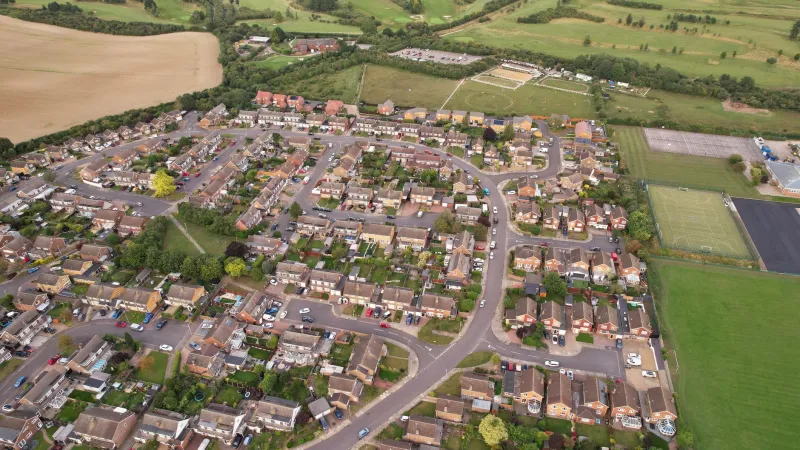
In real estate, the most rewarding opportunities rarely announce themselves loudly. They tend to emerge in established, overlooked communities where fundamentals are strong, demand is steady, and the broader market has not yet recalibrated its perception of value. Parkland, situated in Calgary's southwest quadrant, fits precisely that profile.
For years, the neighbourhood has been celebrated for its mature tree canopy, proximity to Fish Creek Provincial Park, and strong sense of community cohesion. Those qualities have made it a perennial favourite among families. What is less frequently discussed, however, is how those same characteristics are quietly translating into a durable investment proposition — one that a segment of Calgary's real estate investment community has been acting on with increasing conviction.
Understanding Parkland's Appreciation Trajectory
Property values in Parkland have demonstrated a pattern of steady, sustainable growth rather than the volatile swings that can characterize higher-profile urban neighbourhoods. Over the past several years, detached homes in the area have consistently outperformed the broader Calgary suburban benchmark on a price-per-square-foot basis when adjusted for property age and lot size.
This measured appreciation is, paradoxically, part of what makes the area attractive to long-horizon investors. Speculative froth tends to create instability; Parkland's growth has been underpinned by genuine end-user demand. Families relocating from other parts of Canada — particularly from Ontario and British Columbia, where housing affordability has deteriorated significantly — have identified Calgary's southwest as offering exceptional value relative to comparable communities in those provinces. Parkland, with its established infrastructure and mature aesthetic, sits near the top of many relocation shortlists.
Rental Dynamics in a Supply-Constrained Corridor
The southwest Calgary rental market has tightened considerably over the past two years. Vacancy rates across the broader quadrant have compressed, and Parkland's specific inventory of larger detached homes and townhouses commands a premium among renters who require more space — a demographic that has expanded as remote and hybrid work arrangements have become normalized.
For investors, this translates into a rental yield environment that, while not spectacular on an absolute basis, is underpinned by tenant stability. Families renting in Parkland tend to remain for multi-year tenancies, reducing turnover costs and vacancy periods. When combined with relatively conservative purchase prices compared to comparable properties in Altadore, Mount Royal, or Britannia, the effective yield differential can be meaningful over a five-to-ten-year hold period.
Investors acquiring properties in the $650,000 to $900,000 range — which captures a significant portion of Parkland's available inventory — are reporting gross rental yields that remain competitive within the Calgary market, with the added buffer of appreciation potential that more expensive neighbourhoods cannot offer at the same entry point.
Demographic Shifts Reinforcing Long-Term Demand
Calgary's population growth story has been well documented. The city added residents at a pace that outstripped most Canadian metropolitan areas in recent years, driven by interprovincial migration, international newcomers, and a recovering energy sector. What is less frequently examined is how that growth is distributing itself geographically within the city.
The southwest quadrant, anchored by communities like Parkland, is absorbing a disproportionate share of higher-income professional households. This demographic cohort — typically dual-income families with children, or established professionals downsizing from larger suburban properties — places a premium on school quality, green space access, and community stability. Parkland delivers on all three counts, positioning it to benefit from sustained demand regardless of broader market fluctuations.
Furthermore, as Calgary's urban core continues to densify, the relative scarcity of mature, low-density neighbourhoods in the southwest becomes a structural advantage. New construction cannot replicate the established character that defines Parkland, creating a natural ceiling on competitive supply.
Infrastructure and Economic Catalysts on the Horizon
Savvy investors pay close attention not only to current fundamentals but to the pipeline of catalysts that can accelerate value recognition. Several developments in Calgary's southwest warrant attention in this regard.
The ongoing expansion of the LRT network and associated transit improvements in the south and southwest corridors are gradually enhancing connectivity to the downtown core and major employment nodes. While Parkland itself is primarily an automobile-oriented community, improved regional transit infrastructure reduces friction for residents and broadens the pool of prospective tenants and buyers.
Additionally, the continued growth of the Foothills Medical Centre campus and the broader healthcare employment cluster in the northwest creates a steady stream of medical and research professionals seeking quality housing in accessible southwest locations. Parkland's positioning relative to major arterials makes it a practical choice for this demographic.
The energy sector's ongoing recalibration — with Calgary firmly re-established as Canada's energy capital and increasingly positioning itself as a hub for clean technology and diversified resource industries — continues to generate high-income employment that sustains premium residential demand across the southwest.
The Window Before Mainstream Recognition
Perhaps the most critical element of any investment thesis is timing. Parkland is not undiscovered — it has been a desirable address for decades. What the current moment represents, however, is a window before the investment community more broadly recognizes and prices in the compounding advantages outlined above.
As interprovincial migration continues to funnel capital and buyers into Calgary, as rental demand in quality suburban corridors remains elevated, and as infrastructure improvements gradually close the connectivity gap with more central neighbourhoods, the conditions for above-average appreciation appear to be assembling quietly in Parkland's favour.
Investors who have already begun positioning here are not operating on speculation. They are responding to observable fundamentals — demographic data, vacancy trends, comparative pricing analysis — that point toward a neighbourhood on the cusp of broader market reappraisal.
A Measured Approach to a Compelling Opportunity
It bears emphasis that real estate investment in any market carries inherent risk, and Parkland is not exempt from the macroeconomic forces that shape Canadian housing broadly. Interest rate environments, provincial policy shifts, and energy sector volatility all warrant consideration in any investment decision.
Nevertheless, for investors with a medium-to-long-term horizon, a preference for stable cash flow over speculative gain, and an appreciation for the compounding advantages of demographic tailwinds and supply scarcity, Parkland presents a case that is difficult to dismiss. The neighbourhood's combination of established character, consistent demand, and underappreciated investment fundamentals places it in a category that experienced investors recognize well: the kind of opportunity that looks obvious only after the window has closed.
For those currently evaluating where to deploy capital in Calgary's residential market, a closer examination of what Parkland has to offer — beyond its well-earned reputation as a family community — may prove to be time well spent.