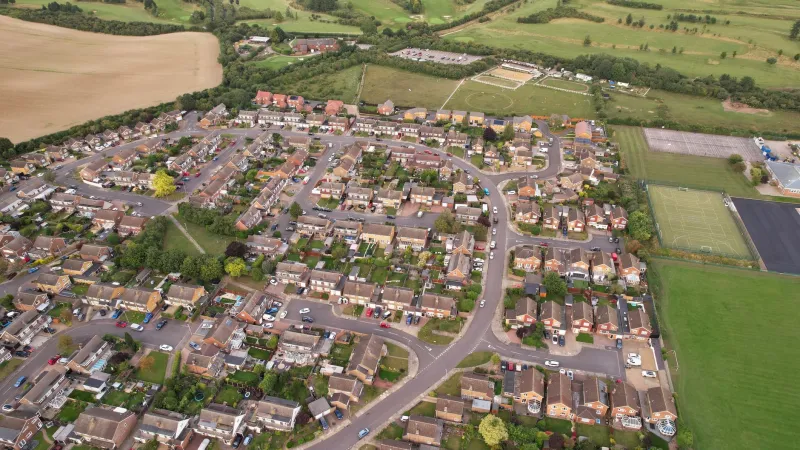
Generation Next: How Young Professionals Are Quietly Redefining Parkland's Real Estate Identity

For much of its history, Parkland's appeal was straightforward to articulate: exceptional schools, generous lot sizes, mature green corridors, and the kind of community cohesion that draws families planting roots for the long term. That narrative remains accurate. What it no longer captures, however, is the full picture.
A measurable demographic shift is reshaping who is buying into Parkland—and doing so at a pace that has caught even seasoned Calgary real estate observers off guard. Young professionals in their late twenties and thirties, many of them navigating hybrid work arrangements and recalibrating what proximity to the city actually means to them, are arriving in Parkland in growing numbers. The implications for property demand, pricing patterns, and community development are significant and, for prospective buyers and investors alike, worth examining closely.
The Lifestyle Calculus Has Changed
For the millennial and Gen Z buyer, the traditional suburban trade-off—more space in exchange for longer commutes and fewer walkable amenities—is no longer an automatic concession they are willing to make. This generation has spent formative years in urban cores, and they carry with them a set of expectations that older suburban models were never designed to meet.
Parkland, somewhat uniquely among Calgary's southwest communities, has been closing that gap. The emergence of walkable retail nodes along key corridors, the gradual expansion of food and beverage offerings, and the proximity of the community to Fish Creek Provincial Park—one of the largest urban parks in Canada—have collectively created an environment that feels less like a retreat from city life and more like a curated alternative to it.
For a professional who spends three days per week working remotely, the ability to walk to a café, access trail networks within minutes of their front door, and enjoy a genuine sense of neighbourhood character carries considerable weight. Parkland is increasingly delivering on precisely those qualities.
Employment Geography Is Shifting in Parkland's Favour
Calendar proximity to downtown Calgary has historically been the primary lens through which suburban commute times were evaluated. That calculus is evolving. The continued growth of employment nodes in Calgary's south and southwest—including the Quarry Park business district, the expanding healthcare corridor along Macleod Trail, and the technology-oriented offices clustering near Anderson Road—has repositioned Parkland as genuinely convenient for a segment of the professional workforce that would have looked elsewhere a decade ago.
For a software developer, marketing professional, or healthcare administrator whose office sits in Quarry Park or along the Glenmore corridor, Parkland represents not a compromise on commute time but a genuine optimisation of it. This geographic alignment between where young professionals work and where Parkland sits within Calgary's grid is one of the less-discussed drivers of the current demographic transition.
What the Numbers Are Beginning to Reflect
The shift in buyer demographics is not merely anecdotal. Property demand metrics in Parkland are revealing patterns consistent with a younger, more mobile buyer profile entering the market. Condominium and townhome formats—traditionally underweighted in a community defined by single-family detached housing—are attracting renewed attention. Developers with land positions in the area are responding, with a number of multi-family projects either in planning or early construction phases.
This diversification of housing typology is itself a feedback loop. As more attainable entry-level product becomes available, it lowers the threshold for young professionals who might otherwise have been priced into less desirable communities or pushed toward the rental market indefinitely. The resulting increase in owner-occupancy among younger cohorts contributes to neighbourhood stability and, historically, to sustained price appreciation.
Average days on market for properties in Parkland's mid-range have also tightened in recent cycles, a pattern consistent with competitive demand from buyers who are decisive, pre-approved, and motivated—characteristics that tend to define professional buyers operating within defined life-stage timelines.
Cultural Infrastructure: The Missing Piece That Is Beginning to Arrive
One honest limitation in Parkland's pitch to younger buyers has been the relative scarcity of cultural programming and evening entertainment options within the community itself. Young professionals who came of age in Kensington, Inglewood, or Calgary's Beltline have expectations around local arts venues, independent restaurants, and community events that a purely residential suburb has historically struggled to satisfy.
That gap is narrowing. Community association programming has expanded meaningfully in recent years, with fitness events, seasonal markets, and cultural gatherings becoming regular fixtures on Parkland's social calendar. The proximity of the community to Fish Creek's programming infrastructure—concerts, nature education, and public events—supplements what the neighbourhood itself offers. And as commercial development follows residential density, the conditions for more robust local retail and hospitality are steadily improving.
For young professionals evaluating Parkland against urban alternatives, this trajectory matters as much as the current state. Buying into a community on the ascending portion of its lifestyle curve, before the amenity base fully matures, has historically been one of the more reliable paths to strong equity appreciation.
Investment Implications for Those Paying Attention
Demographic transitions of this kind tend to have durable effects on property values. When a community successfully broadens its buyer pool—attracting career-stage purchasers in addition to its established family demographic—it creates a deeper, more liquid market with multiple demand drivers operating simultaneously. That structural resilience tends to be reflected in price stability during softer market conditions and accelerated appreciation when broader Calgary real estate sentiment turns positive.
For investors, the current moment in Parkland's demographic story represents a window. Younger professional buyers bring with them longer holding periods, higher lifetime earning trajectories, and a tendency to upgrade within communities they have already committed to. The professional who purchases a townhome in Parkland at thirty-two is a plausible candidate to purchase a detached family home in the same community at thirty-eight. That pattern of intra-community mobility sustains transaction volume and supports price floors in ways that benefit all property owners.
A Community in Productive Transition
Parkland is not abandoning the qualities that established its reputation. The school catchments remain exceptional, the parks and pathways continue to define daily life, and the community's physical character—its mature trees, its generous setbacks, its general sense of care—remains intact. What is changing is the range of people who now see themselves in that picture.
The young professional arriving in Parkland today is not settling for a suburb. They are choosing a community that aligns with where their life is headed—and in doing so, they are becoming part of a demographic story that is reshaping one of Calgary's most established neighbourhoods in real time.
For those considering a purchase in the southwest, understanding this transition is not merely context. It is due diligence.