Catchment Areas and Capital Growth: How School Quality Shapes Property Values in Parkland
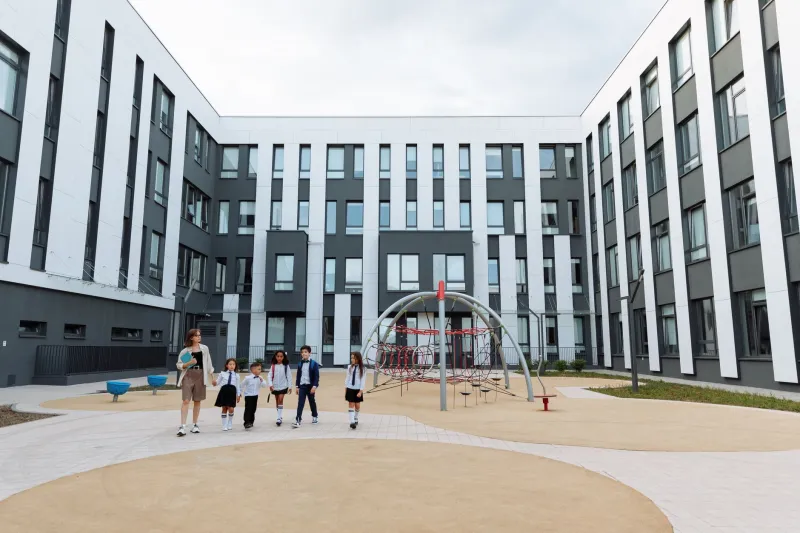
When Calgary families begin their home search in earnest, the conversation almost always arrives at the same question: which schools will my children attend? In Parkland, that question carries a particularly compelling answer — and the real estate market has taken notice.
Across Canadian cities, proximity to high-performing schools has long been recognized as a reliable driver of residential property premiums. What makes Parkland's situation distinctive is the degree to which this relationship has remained stable, even as broader market conditions in Calgary have fluctuated. Understanding why requires a closer look at the educational landscape that surrounds this southwest community.
The Academic Infrastructure Surrounding Parkland
Parkland sits within a catchment area that grants access to several well-regarded schools across the Calgary Board of Education (CBE) and Calgary Catholic School District (CCSD) systems. Families in the neighbourhood typically have access to both English and French immersion programming at the elementary level, a feature that has grown considerably in demand among Calgary parents over the past decade.
At the secondary level, students from Parkland feed into schools with consistently strong provincial assessment results. Alberta Education's annual accountability pillar reporting provides one of the most transparent windows into school performance available in Canada, and the institutions serving southwest Calgary routinely score above provincial benchmarks in categories including safe and caring environments, citizenship, and academic achievement.
Enrollment trends within these schools tell a secondary story worth examining. Schools experiencing sustained enrollment growth — as opposed to those managing declining registration — tend to attract ongoing investment in programming, staffing, and facilities. For Parkland, proximity to schools demonstrating healthy, stable enrollment is not merely a lifestyle consideration; it is a signal of community confidence that reverberates through surrounding property values.
What the Data Reveals About Price Premiums
Real estate economists have studied the correlation between school quality and home prices across Canadian markets for decades. A frequently cited pattern holds that homes within the catchment boundaries of high-performing schools command premiums ranging from five to twenty percent over comparable properties in lower-ranked catchments — a differential that, in Calgary's current market environment, can represent a substantial sum in absolute dollar terms.
In Parkland specifically, the premium is reinforced by a compounding effect. The neighbourhood already benefits from above-average lot sizes, mature landscaping, and a relatively low density of new construction, all of which support price stability. When you layer strong school access onto that foundation, the result is a profile that consistently attracts the demographic most likely to sustain long-term demand: dual-income professional families with school-age children.
This demographic tends to hold properties for longer periods, reducing turnover and contributing to the price floor stability that makes Parkland an appealing proposition not only for owner-occupiers but for investors seeking lower volatility in their real estate portfolios.
French Immersion Access as a Differentiating Factor
One aspect of Parkland's educational advantage that deserves particular attention is access to French immersion programming. Across Alberta, demand for French immersion spaces has grown substantially, driven by both cultural interest and a recognition that bilingual education carries documented cognitive and career-related benefits.
Because French immersion is not universally available across all Calgary catchments, proximity to schools offering this programming creates a meaningful distinction in the eyes of many buyers. Families who have prioritized French immersion for their children — or who are considering it — often make their housing decisions in direct response to catchment boundaries. This dynamic narrows the pool of suitable properties for a motivated subset of buyers and, in doing so, applies additional upward pressure on values within qualifying areas.
For Parkland homeowners, this means that a portion of their property's value is, in effect, underwritten by the scarcity of French immersion access elsewhere in the city.
Private School Proximity and the Broader Educational Ecosystem
Beyond the public and Catholic systems, Parkland benefits from reasonable proximity to several independent and private schools concentrated in Calgary's southwest quadrant. While private school enrolment does not directly affect public catchment dynamics, the presence of these institutions speaks to a broader culture of educational investment that permeates the surrounding communities.
Neighbourhoods that attract families willing to invest substantially in private education tend to share certain characteristics: higher household incomes, greater civic engagement, and a demonstrated commitment to property maintenance and community stewardship. These are qualities that sustain property values over generational timelines, independent of short-term market cycles.
Practical Guidance for Buyers Evaluating School Catchments
For families currently evaluating properties in Parkland, several practical steps can help ensure that school access aligns with both immediate educational goals and long-term investment expectations.
First, verify catchment boundaries directly with the CBE and CCSD rather than relying solely on representations made during the sales process. Catchment boundaries can shift as the city grows and school populations evolve, and purchasing a property on the assumption of a specific school assignment without independent verification introduces unnecessary risk.
Second, review Alberta Education's most recent accountability pillar data for schools within your prospective catchment. This publicly available reporting provides a standardized basis for comparison that goes beyond reputation and anecdote.
Third, consider the trajectory of enrollment in schools you are evaluating. A school that is growing steadily is likely to continue attracting resources and programming investment, while one experiencing significant decline may face consolidation decisions that alter catchment boundaries in unpredictable ways.
Finally, speak with current Parkland residents — particularly those with children already enrolled in local schools. The lived experience of navigating the registration process, extracurricular options, and school community culture offers context that no dataset can fully capture.
A Long-Term Perspective on Educational Value
Real estate investment, at its most thoughtful, is an exercise in identifying durable sources of demand. In Parkland, the educational infrastructure that surrounds the community represents precisely that kind of durable advantage — one that is unlikely to diminish as long as Calgary's population continues to grow and families continue to prioritize school quality in their housing decisions.
The relationship between academic performance, enrollment health, and property appreciation is not a short-term phenomenon. It is a structural feature of how residential real estate markets function in cities where education is a primary driver of household location decisions. In southwest Calgary, that dynamic is well established, and Parkland sits squarely within its most favourable expression.
For buyers who understand this relationship, a home in Parkland is not simply a place to live — it is a position within one of the city's most defensible real estate ecosystems, supported by institutions that families have consistently chosen, and continue to choose, for the education of their children.